

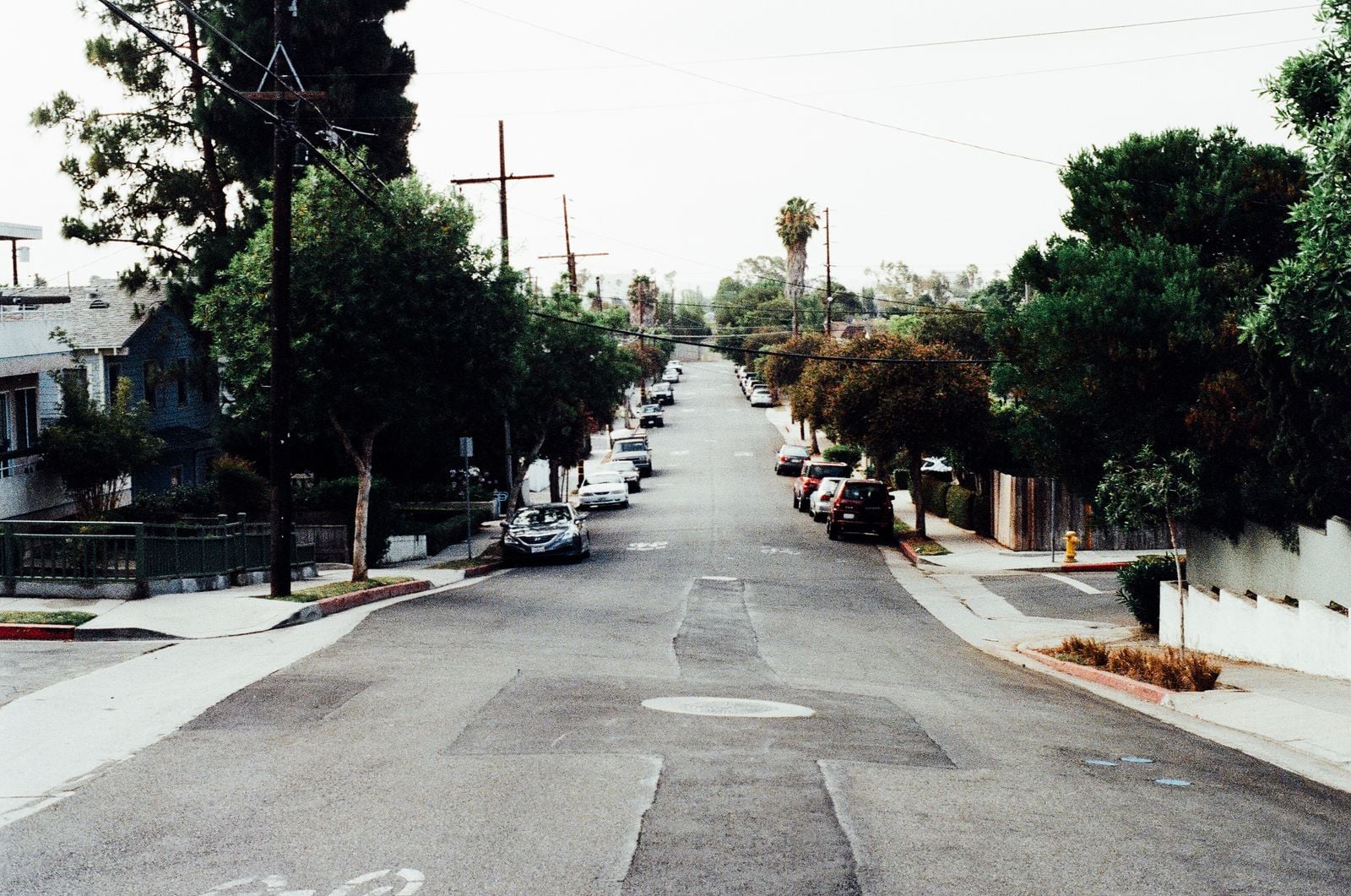
For years we assumed the people driving three extra streets past their turn, or sitting in a parked car with the engine off before walking in the front door, were doing something wasteful. A small failure of efficiency. A dead patch in the day that could be reclaimed with better planning.
We have come around on this.
The long way home, examined honestly, looks less like avoidance and more like an unofficial piece of infrastructure. A small chamber between two rooms of a life that otherwise share a wall.
The commute was doing something we didn’t credit it for
The clearest case for the long way home is the one that only became visible when the commute disappeared.
A study by economist Natalia Emanuel and co-authors, summarised by Entrepreneur, drew on five major national surveys to look at what a decade of remote work has done to the workers doing it. The productivity story is mostly good. The social and emotional story is more complicated. Remote workers spent 58 per cent more hours alone than their in-office counterparts, and were more likely to go an entire day without speaking to anyone. They did not compensate by socialising more in the evenings.
The isolation, in other words, was not confined to the workday. It leaked.
One reading of that finding is about company culture and loneliness, and it is a fair reading. But another reading is quieter and more structural: the commute was doing a job that nobody had named, and when it vanished, nothing replaced it.
The commute was a transition. A physical corridor between the person you are at work and the person you are at home. Healthline’s guide on decompressing after work makes this point plainly. Many workers report work-related stress that affects their home life. The piece suggests that remote workers may benefit from creating an artificial commute—such as a walk, bike ride, or brief change of clothes and location—to signal to the brain that the workday has ended.
That is what the long way home has always been. It is just that most of us who took it didn’t think of it that way.
What the detour is actually for
The behaviour is easy to describe. You finish work. You get in the car, or on the bike, or on the train. And instead of taking the shortest route, you take a route that adds five, ten, sometimes twenty minutes. You loop through a neighbourhood you don’t live in. You get off two stops early. You sit in the car for a bit before turning the key.
None of this is a productivity failure.
It is a way of arriving home as a person and not as an unfinished email. The brief in-between is where the workday gets set down. Not solved, not filed, just set down.
Adults who do this are often doing it for someone else as much as themselves. A parent who wants to walk in the door without the tension of the last meeting still on their face. A partner who has learned that ten minutes of nothing in a parked car makes the evening kinder than ten minutes of nothing in the kitchen with someone waiting to hear about the day.
This is not a diagnosis. It is a way of describing a common pattern.
Photo by Vitali Adutskevich on Pexels
The Baylor list and the shape of an unfinished day
One of the more useful pieces of research in the Healthline write-up is a study out of Baylor University, which found that people who wrote a to-do list of what they hadn’t yet done fell asleep noticeably faster than those who wrote a list of what they had accomplished. Somewhere between nine and ten minutes faster, in that specific dataset. It is one study, not settled consensus, and it measures sleep onset rather than sleep quality. But the intuition behind it is familiar.
Unfinished things follow you.
They follow you into the kitchen, into the conversation you were trying to have with your kid, into the moment you were meant to be putting down the phone. The Baylor result suggests that the act of writing them down externalises them enough that the mind stops holding them.
The long way home works on the same principle, without the paper. The extra distance is a stretch of time in which the day’s unfinished list gets acknowledged, briefly turned over, and then set aside for tomorrow. It is not deep processing. It is closer to the mental equivalent of taking off your shoes at the door.
Improvisation, awkwardness, and giving discomfort its own room
There is a related pattern worth pointing at. Building on the idea that naming discomfort can change how people behave, the long way home does something similar with the day’s residue. Instead of trying to arrive at the front door as if the workday hadn’t happened, the detour lets the workday still be there for a while. It has a container. A route.
Then it ends.
This is different from ruminating. Ruminating is what happens when the residue has no container and follows you into the evening. The detour is a container.
Why this matters more as we get older, not less
One of the more encouraging pieces of recent research on later life is a Yale study led by Becca R. Levy, which followed more than 11,000 participants in the Health and Retirement Study for up to 12 years. Roughly 45 per cent showed measurable improvement in cognitive function, physical function, or both. Around 32 per cent improved cognitively; 28 per cent improved physically. The authors argue that beliefs about aging shaped which trajectory people ended up on.
This is one study among many on aging, and it is correlational rather than causal on the belief question. But the descriptive finding is striking on its own terms: a substantial share of older adults get better at things, not worse. Averages hide it.
The connection to the long way home is not that a detour keeps you sharp. That would be an overreach. The connection is that small, self-directed rituals, chosen and repeated across a life, appear to be part of what people who do well in later life have in common. A short walk between rooms of the day is exactly the sort of tiny practice that never shows up in a productivity metric and never shows up in a health metric either, but which sits quietly underneath both.
Building on the concept that meaningful social connections have natural limits, one thing that gets lost is that maintaining any of those relationships depends on being able to actually show up for them. The person who walks in the door still braced against a difficult afternoon is not fully in the room. The detour is a way of trying to arrive.
What the sources do and don’t support
None of the studies cited here measure the long way home directly. There is no controlled trial of adults told to add ten minutes to their evening commute. The Emanuel paper is about remote work and isolation, not detours. The Baylor result is about pre-sleep lists. The Levy paper is about aging trajectories and belief.
What the sources support is narrower and more useful than a slogan.
They support the observation that transitions between roles appear to matter for how the second role goes. They support the observation that externalising unfinished business, in some small form, reduces its grip. They support the observation that small self-directed practices, held over years, sit underneath the trajectories we later describe as aging well or aging badly.
The long way home is one of those practices. It is not the only one, and it is not required. Some people decompress by talking on the phone in the driveway. Some people change clothes the moment they walk in. Some people garden for ten minutes before they speak to anyone. The specific shape matters less than the fact that there is a shape at all.
A small defence of the extra ten minutes
The productivity culture of the last decade has been unusually hostile to time that doesn’t obviously produce anything. The long way home produces nothing you can put on a spreadsheet. It is not exercise, exactly. It is not rest, exactly. It is not socialising. It is not even reliably enjoyable.
It is a threshold.
Adults who take it are not wasting time. They are protecting the version of themselves that walks through the door, and, quietly, the people waiting on the other side of it.