


Technology, Politics, Mind. Since 2014.
Lachlan Brown
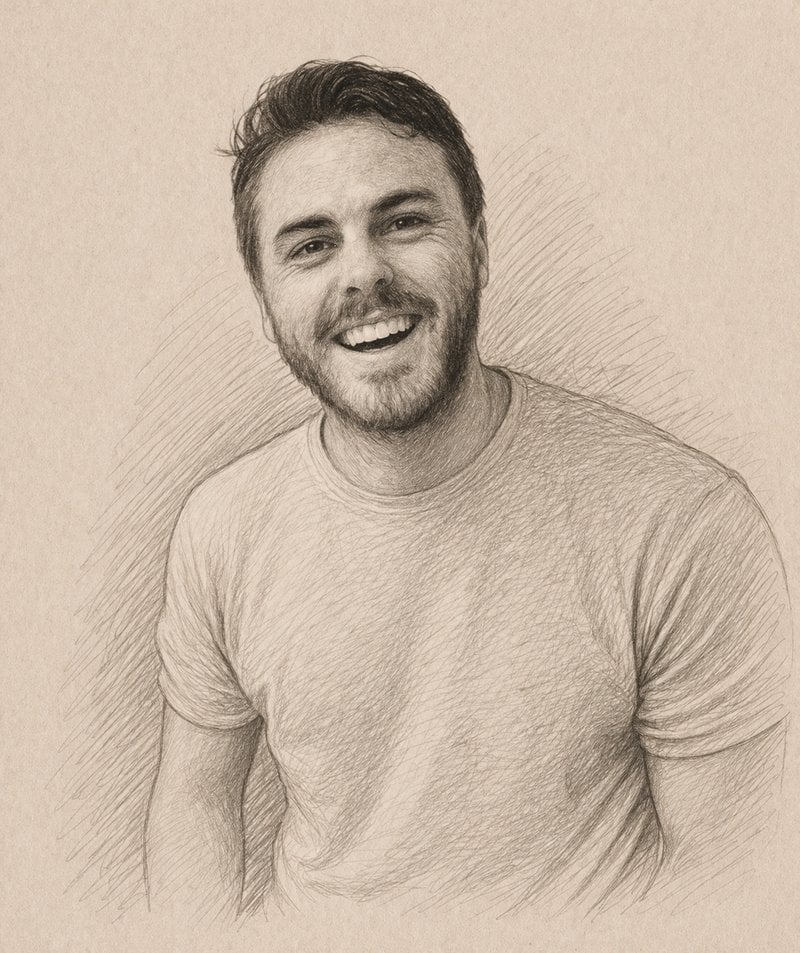
Writer at Silicon Canals

Lachlan Brown

Co-Publisher

Lachlan Brown is a writer at Silicon Canals contributing across the Mind pillar. His background blends formal training — a Graduate Diploma in Psychological Studies from Deakin University — with a long practice of Eastern philosophy and two decades of operating businesses from scratch. He writes about high-performance routines, decision-making under pressure, and the discipline of clarity in technology work — where the patterns that govern building also govern living. He splits his time between Singapore and Ho Chi Minh City.

Profile on Brown Brothers Media →

Mind

Feeling purposeless in your 60s or 70s isn’t simply a failure of character. Researchers can measure a broad decline in purpose across later adulthood, and some of its strongest correlates are exactly the losses that accumulate with age — declining health, widowhood and the disappearance of long-held social roles.

Longitudinal research finds an average decline in later-life purpose, but health, bereavement, social roles and even the questionnaire used all complicate the story.

Mind

A study following more than 1,000 children for decades found that self-control measured between ages 3 and 11 predicted better health and financial outcomes in adulthood — and the relationship remained even after researchers accounted for intelligence and childhood social class.

The Dunedin cohort linked repeated childhood self-control measures with adult health and finances, even after adjustment for IQ and social class. The result is substantial, but it is not destiny or proof of causation.

Mind

People who reach later life with few close friends aren’t necessarily cold or socially deficient. Research shows that one-sided relationships can become emotionally exhausting, while older adults increasingly value friendships built on mutual support — meaning some people may eventually walk away from relationships in which they spent years carrying most of the emotional weight.

A small friendship circle is not a personality test. Research on difficult ties, support imbalance and social selectivity offers a more careful explanation.

Mind

Organisational psychologist Tasha Eurich studied thousands of people and found a remarkable self-awareness gap: about 95% believed they were self-aware, but only an estimated 10–15% met her criteria — suggesting most of us understand ourselves, and how others see us, considerably less accurately than we think.

Eurich’s widely repeated 95% versus 10–15% gap is an estimate from a multi-study research programme, and its most useful insight is the split between internal and external awareness.

Mind

When work is interrupted, researchers found it takes an average of 23 minutes and 15 seconds before people return to the original task. Meanwhile, Microsoft’s workplace data shows its heaviest-connected workers can receive 275 meetings, emails and chat pings a day — suggesting chronic distraction isn’t just a focus problem, but a problem built into how modern work is organized.

The 23-minute return time and Microsoft's 275 daily pings measure different things, but together they reveal how workplace systems can turn sustained attention into an organisational privilege.

Mind

A 2026 analysis of more than 215,000 moves by professional chess players found something deeply counterintuitive: faster decisions were consistently associated with better moves, even after researchers accounted for position complexity and time pressure — suggesting that among experts, hesitation can sometimes signal uncertainty rather than deeper thinking.

Professional chess players often made their strongest moves fastest. The study suggests hesitation can reveal uncertainty, but it does not show that forcing people to rush improves judgement.